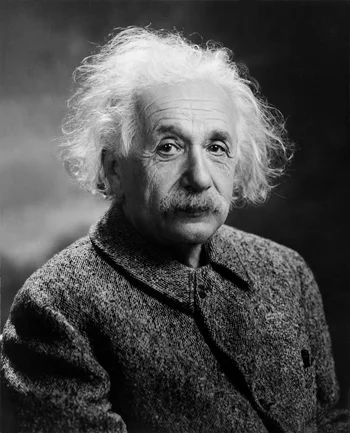
William Marsh Rice
March 14, 1816 — September 23, 1900 — Springfield, Massachusetts, United States
William Marsh Rice was an American businessman who built one of the largest fortunes in 19th-century Texas through trade, real estate, and railroads. He is remembered today primarily for bequeathing his vast estate to establish what became Rice University in Houston. His death in 1900 was itself the subject of a sensational murder investigation that exposed a plot to steal his fortune before it could reach its intended charitable purpose.
Early Life and Arrival in Texas
William Marsh Rice was born on March 14, 1816, in Springfield, Massachusetts, into a modest New England family. As a young man he worked as a store clerk, gaining early exposure to trade and commerce that would shape his later career. Seeking greater opportunity, Rice relocated to the Republic of Texas in the early 1830s, settling in the booming port city of Houston. There he entered the mercantile business, trading in cotton, sugar, and other goods flowing through the Gulf Coast economy. His timing was fortunate: Texas was rapidly expanding, and Houston was emerging as a key commercial hub connecting inland plantations to international markets. Rice proved to be a shrewd and disciplined businessman, reinvesting his profits and diversifying into shipping and warehousing. By the mid-19th century, he had established himself as one of the wealthiest and most influential merchants in the state, laying the financial foundation for the far more extensive fortune he would accumulate in the decades that followed.
Building a Texas Fortune
Over the following decades, Rice expanded his business empire well beyond mercantile trade. He invested heavily in real estate throughout Houston and across Texas, acquiring valuable urban and rural properties whose worth grew steadily alongside the state's development. He also invested in banking and, notably, in the emerging railroad industry, recognizing early that rail infrastructure would be essential to Texas's economic future. During and after the Civil War, Rice relocated some of his business interests, spending time in Mexico and later in New York City, where he continued to manage his growing Texas-based holdings from afar. His financial acumen allowed him to weather economic upheavals that ruined many of his contemporaries, and by the late 1800s he had amassed a fortune worth millions of dollars. Rice remained personally frugal despite his wealth, and he began to contemplate how his fortune might be used for a lasting public purpose rather than simply passed down through his family, setting the stage for his most enduring legacy.
Did You Know?
William Marsh Rice's death in 1900 was not initially recognized as murder. His valet and a corrupt lawyer had forged his will and signature on checks to steal his fortune, and only a sharp-eyed bank teller's suspicion about a misspelled name unraveled the plot, ensuring Rice's true wishes—and his gift to found Rice University—were ultimately honored.
Legacy: A Fortune for Education
In 1891, Rice took the pivotal step of chartering the William M. Rice Institute for the Advancement of Literature, Science, and Art, intending his wealth to fund a great educational institution in Houston. His plans, however, were nearly derailed by tragedy: on September 23, 1900, Rice died in his New York apartment under suspicious circumstances. Investigators soon uncovered a scheme orchestrated by his lawyer, Albert T. Patrick, working with Rice's valet, Charles F. Jones, to forge a will and steal his estate. The plot unraveled, Patrick was convicted, and Rice's original intentions were upheld in court. As a result, his fortune funded the founding of the Rice Institute, which opened in 1912 and later became Rice University, one of the nation's leading research universities. Rice's insistence on tuition-free education for Texas students shaped the institution's identity for decades. Today, his name endures not only in the university itself but in Houston's broader cultural and philanthropic landscape, cementing his legacy far beyond his own lifetime.