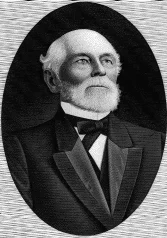
Johann Strauss I
March 14, 1804 — September 25, 1849 — Vienna, Austria
Johann Strauss I was an Austrian composer who, alongside Joseph Lanner, transformed the Viennese waltz from a folk dance into a celebrated concert genre. His energetic conducting and prolific output of waltzes, polkas, and galops made him one of the most popular musicians of his era. He is remembered today both for his rousing Radetzky March and as the patriarch of a musical dynasty carried forward by his sons Johann II, Josef, and Eduard.
Early Life and Musical Beginnings
Johann Baptist Strauss was born in Vienna in 1804 into a family with modest means. Despite early hardships, he showed a natural aptitude for music and trained as a violinist, eventually finding work in Viennese dance orchestras. It was in this vibrant musical environment that he met fellow musician Joseph Lanner, and the two formed a partnership that would prove pivotal to the development of Viennese light music. Strauss played viola in Lanner's ensemble before the two eventually became rivals, each leading his own orchestra. Vienna in the early nineteenth century was a city enthralled by dance, and the young Strauss quickly absorbed the rhythms and melodic sensibilities that would define his career. His early experiences performing in ballrooms and public gardens gave him an intimate understanding of what made audiences move, laying the groundwork for the compositions that would soon make him a household name across the Austrian Empire and beyond.
Rise to Fame and the Radetzky March
Strauss formed his own orchestra in the 1820s and toured extensively throughout Europe, bringing the Viennese waltz to audiences in Germany, France, and England. His compositions—hundreds of waltzes, polkas, and galops—captured the exuberant spirit of the age and helped elevate dance music into a respected art form. Alongside Lanner, he is credited with popularizing the waltz on an international scale, cementing Vienna's reputation as the capital of dance music. His most enduring composition, the Radetzky March, was written in 1848 to honor the Austrian field marshal Joseph Radetzky von Radetz following his military victories in Italy. The march's driving rhythm and instantly recognizable melody made it an immediate favorite, and it remains one of the most performed pieces of orchestral music in the world, traditionally closing the annual Vienna New Year's Concert with audience clapping along to its beat.
Did You Know?
Johann Strauss I reportedly tried to discourage his son Johann Strauss II from becoming a musician, wanting him to pursue banking instead. His son ignored this advice and went on to surpass his father in fame, becoming known worldwide as 'The Waltz King.'
Legacy and the Strauss Dynasty
Johann Strauss I died in Vienna on September 25, 1849, having established himself as one of the defining musical figures of his generation. Though he reportedly discouraged his eldest son from pursuing music, hoping he would choose a more stable profession, Johann Strauss II defied his father's wishes and went on to become even more famous, earning the title 'The Waltz King.' Strauss I's other sons, Josef and Eduard, also became accomplished composers and conductors, extending the family's musical legacy across generations. Together, the Strauss family shaped the sound of nineteenth-century Vienna and left an indelible mark on the history of light classical music. Johann Strauss I's pioneering role in popularizing the waltz, combined with the enduring popularity of the Radetzky March, ensures his place as the founding father of a musical dynasty whose influence still resonates in concert halls and celebrations around the world today.