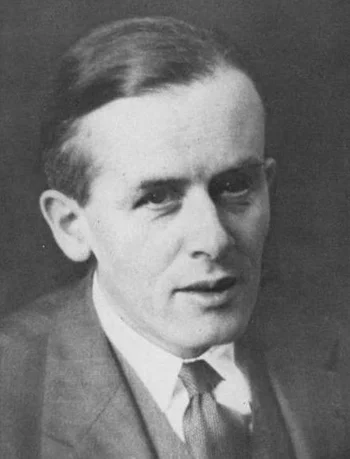
Arthur James Arnot
August 26, 1865 — 1946 — Scotland
Arthur James Arnot was a Scottish-born electrical engineer whose inventive work reshaped both industrial tools and public infrastructure. He is best remembered for patenting the world's first electric drill in 1889, a breakthrough that transformed how people bored into rock, metal, and masonry. Arnot later applied his engineering expertise to large-scale power generation, most notably designing the Spencer Street Power Station in Melbourne, Australia.
Early Life and Education
Arthur James Arnot was born on August 26, 1865, in Scotland, during an era when electrical science was rapidly transitioning from laboratory curiosity to practical technology. Like many ambitious engineers of his generation, Arnot came of age as electricity began powering streetlights, trams, and factories across Britain and its empire. Details of his formal education remain sparse, but his later career suggests rigorous training in electrical and mechanical engineering, fields that were still being formalized as academic disciplines in the mid-to-late 19th century. Scotland, with its strong tradition of engineering innovation stretching back to James Watt, provided fertile ground for a young man drawn to applied science. Arnot eventually left Scotland for Australia, joining a wave of skilled engineers and tradesmen who emigrated to the colonies seeking opportunity amid rapid industrial expansion. This move would prove pivotal, positioning him at the center of Melbourne's growing electrical industry during a period when cities across the world were racing to electrify transportation, lighting, and manufacturing. His early experiences in Scotland's industrial environment laid the groundwork for the inventive career that followed in his adopted country.
Inventing the Electric Drill
Arnot's most celebrated achievement came in 1889, when he patented the world's first electric drill, working alongside fellow engineer William Blanch Brain. The invention was designed initially for use in mining and construction, offering a powered alternative to the labor-intensive hand drills and manual boring tools that had dominated industry for centuries. By harnessing electricity to drive a rotating bit, Arnot's drill dramatically increased efficiency and reduced physical strain on workers tasked with boring into rock, coal seams, and hard materials. The invention emerged from Melbourne, Australia, where Arnot was working at the time, reflecting the city's growing role as a hub of electrical innovation in the late 19th century. Though the electric drill would take decades to evolve into the portable, household tool familiar today, Arnot's original patent established the foundational concept that powered drilling could replace manual labor entirely. This breakthrough placed him among the pioneering inventors whose work quietly transformed everyday industrial practice. The electric drill's legacy extended far beyond mining, eventually influencing construction, manufacturing, and home improvement across the globe, cementing Arnot's place in the history of practical invention.
Did You Know?
Arthur James Arnot patented the world's first electric drill in 1889 alongside William Blanch Brain, decades before the tool became a staple of workshops and construction sites worldwide. The invention was originally intended for mining and heavy industrial use rather than the household repairs it's associated with today.
Later Career and Legacy
Following his invention of the electric drill, Arnot continued to build a distinguished career in electrical engineering within Australia. His expertise led him to larger infrastructure projects, culminating in his design of the Spencer Street Power Station in Melbourne, a facility that supplied electricity to the growing city and its expanding tram network. This project demonstrated Arnot's versatility, showing he could move seamlessly from inventing small-scale tools to engineering major public utilities that powered urban life. The power station stood as a testament to the rapid electrification sweeping Australian cities in the early 20th century, and Arnot's role in its design reflected his standing as a respected figure in the field. Arnot died in 1946, leaving behind a legacy defined by practical innovation that touched both individual workers and entire cities. His electric drill patent, often overlooked in popular accounts of invention history, represents an important milestone in the mechanization of manual labor. Today, engineers and historians recognize Arnot as a quiet but significant contributor to the electrical age, a Scottish emigrant whose ingenuity helped power Australia's industrial growth and whose foundational drill design echoes in tools used worldwide.