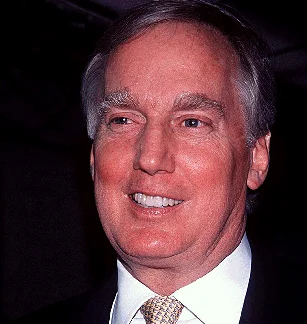
Walter Bruno Henning
August 26, 1908 — January 8, 1967 — Ronnenberg, Germany
Walter Bruno Henning was a German philologist who became one of the twentieth century's foremost scholars of Middle Iranian languages, including Sogdian, Parthian, and Middle Persian. His meticulous decipherment of manuscripts recovered by the Turpan expeditions opened vast new windows onto Manichaean, Zoroastrian, and Buddhist literature from Central Asia. Henning's work laid the scholarly foundation for the modern field of Iranian philology.
Early Life and Education
Walter Bruno Henning was born on August 26, 1908, in Ronnenberg, near Hanover, Germany. He showed an early aptitude for languages and pursued advanced study in Oriental philology at German universities, eventually gravitating toward the study of Iranian languages under the influence of leading orientalists of the era, including Friedrich Carl Andreas. Berlin, with its rich collection of manuscripts brought back from the German Turfan expeditions to Central Asia in the early twentieth century, became a natural center for his training. These expeditions, led by explorers such as Albert Grünwedel and Albert von Le Coq, had returned with thousands of fragmentary texts written in Sogdian, Parthian, Middle Persian, and other little-understood scripts and languages, largely religious writings belonging to Manichaean, Buddhist, and Christian communities that had flourished along the Silk Road. Henning immersed himself in this material, acquiring the linguistic and paleographic skills necessary to read languages that had, in many cases, never before been systematically studied. His doctoral training equipped him with the philological rigor that would characterize his entire scholarly career, and by his mid-twenties he was already producing groundbreaking analyses of previously indecipherable fragments.
Scholarly Career and Major Contributions
Henning's career centered on unlocking the Turfan corpus, and he produced landmark editions and analyses of Sogdian, Parthian, and Middle Persian texts that had defeated earlier scholars. He made especially important contributions to understanding Manichaean literature in Iranian languages, clarifying doctrinal and historical questions through careful textual reconstruction. His 1936 study of the Sogdian Ancient Letters, fourth-century merchant correspondence discovered along the Silk Road, remains a foundational work in Sogdian studies. Fleeing Nazi Germany in the 1930s due to his Jewish ancestry, Henning found refuge in Britain, where he joined the School of Oriental and African Studies (SOAS) at the University of London. There he built an internationally influential program in Iranian studies, mentoring a generation of scholars. He also made significant advances in Khwarezmian, another poorly attested Middle Iranian language, and contributed importantly to Zoroastrian studies, including analysis of Zoroaster's own Gathic language. His broad philological command allowed him to move fluently among multiple scripts—Manichaean, Sogdian, Pahlavi, and others—reconstructing grammar, vocabulary, and historical context from fragmentary evidence with extraordinary precision.
Did You Know?
Henning's decipherment of the Sogdian Ancient Letters—fourth-century merchant correspondence found abandoned along the Silk Road—gave historians a rare firsthand glimpse into everyday trade, family life, and even reports of political upheaval in Central Asia, all recovered from fragile manuscripts that had lain buried in the desert for over 1,500 years.
Later Career and Legacy
In the 1960s, Henning relocated to the United States, taking up a position at the University of California, Berkeley, where he continued his research and teaching until his death. He helped establish the Corpus Inscriptionum Iranicarum, a major publishing project for Iranian texts and inscriptions that continues to guide the field. Henning died on January 8, 1967, in Berkeley, California, at the age of 58. His scholarship remains foundational: virtually every subsequent study of Sogdian, Parthian, Manichaean Middle Persian, and Khwarezmian builds on his editions, grammatical analyses, and historical interpretations. He trained and influenced numerous students who went on to shape Iranian studies in Europe and North America, and his rigorous philological method set a lasting standard for the discipline. Today, Henning is remembered as one of the discipline's towering figures, a scholar whose patient decoding of fragile, fragmentary manuscripts salvaged from the deserts of Central Asia gave voice to long-silent communities and languages, permanently enriching our understanding of the ancient and medieval Iranian world.