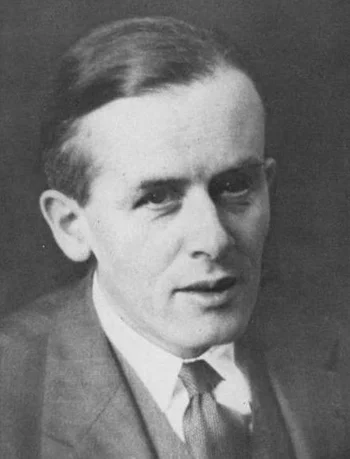
Johann Heinrich Lambert
August 26, 1728 — September 25, 1777 — Mulhouse, Republic of Mulhouse
Johann Heinrich Lambert was an Alsatian polymath from the Republic of Mulhouse who rose from humble beginnings to become one of the leading scientific minds of the 18th century. Almost entirely self-taught, he made lasting contributions to mathematics, physics, astronomy, philosophy, and cartography. His proof that pi is irrational remains one of his most celebrated achievements.
Early Life and Self-Education
Johann Heinrich Lambert was born on August 26, 1728, in Mulhouse, a small independent republic allied with the Swiss Confederacy in the Alsace region. He came from a modest family of tailors, and financial hardship meant he could not pursue formal higher education. Instead, Lambert left school at age twelve to help support his family, working various jobs including as a clerk and secretary. Despite these limited circumstances, he possessed a voracious intellectual curiosity and taught himself mathematics, physics, and philosophy by reading extensively on his own. His talent eventually caught the attention of wealthy patrons, and he secured a position as a private tutor for an aristocratic Swiss family, the von Salis household. This role proved pivotal, granting him access to an excellent library and the freedom to travel across Europe, during which he met leading scientists and scholars of his day. These formative experiences, combined with his relentless self-study, transformed a tailor's son into one of the most versatile thinkers of the Enlightenment era, laying the groundwork for the remarkable breadth of his later scientific contributions.
Groundbreaking Scientific Contributions
Lambert's most famous mathematical achievement came in 1768, when he proved that pi is an irrational number, settling a question that had persisted since antiquity. He also conjectured that pi might be transcendental, a claim later confirmed by others. In physics, Lambert made foundational contributions to photometry, the study of light measurement, publishing his influential work Photometria in 1760, which introduced concepts still used today, including Lambert's cosine law. He also advanced the study of heat transfer and hygrometry, the measurement of atmospheric moisture. Lambert's work in cartography produced several map projections that bear his name, including the Lambert conformal conic projection, still widely used in aviation and mapmaking. He contributed to non-Euclidean geometry, exploring the parallel postulate decades before it became a major mathematical focus. In astronomy, he proposed theories about the structure of the universe, including ideas about star systems and the Milky Way. His philosophical writings, particularly Neues Organon (1764), addressed logic and the theory of knowledge, earning him recognition alongside contemporaries like Immanuel Kant, with whom he corresponded.
Did You Know?
Lambert never received any formal education beyond age twelve, yet he taught himself enough mathematics and science to prove that pi is irrational—a feat that had eluded scholars for centuries. He was so confident in his abilities that when Frederick the Great asked him which sciences he had mastered, Lambert reportedly replied simply, "All of them."
Later Career and Enduring Legacy
In 1764, Lambert moved to Berlin, where Frederick the Great appointed him to the Prussian Academy of Sciences, providing him a stable institutional home for his final years. There he continued producing influential work across disciplines, collaborating with fellow academicians and further developing his ideas on cosmology, mathematics, and philosophy. Lambert was known for his blunt, sometimes eccentric personality, but his intellectual rigor earned widespread respect. He died in Berlin on September 25, 1777, at the age of 49. Lambert's legacy endures across multiple fields: mathematicians remember him for irrational number theory and early explorations of non-Euclidean geometry, physicists credit him with founding modern photometry, and cartographers still rely on his map projections for navigational charts and geographic information systems. Craters on the Moon and Mars bear his name, as does an asteroid, reflecting his contributions to astronomy. His extraordinary journey from an impoverished, self-taught tailor's apprentice to a celebrated member of the Prussian Academy exemplifies the Enlightenment ideal that talent and diligence could overcome the barriers of birth and circumstance.