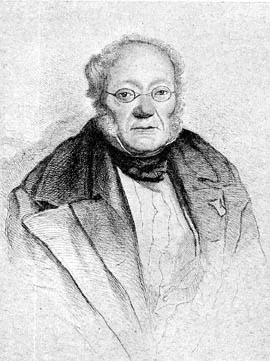
August Strindberg
January 22, 1849 — May 14, 1912 — Sweden
August Strindberg was the greatest Swedish dramatist and one of the founding figures of modern theater. His plays anticipated naturalism, expressionism, and even absurdism — genres that would not fully flourish for decades after his most experimental works. A volcanic, contradictory personality, he was simultaneously a visionary artist and a deeply troubled man whose turbulent personal life suffused his writing.
Early Life and Naturalist Drama
Born January 22, 1849 in Stockholm, Strindberg grew up in a difficult household — he was the illegitimate child of a waitress and her eventual husband, a fact that scarred his sense of social standing. He studied at Uppsala University but did not graduate, and worked as a telegrapher, tutor, and journalist while writing his first plays. His breakthrough came with The Father (1887) and Miss Julie (1888) — two plays that brought the hostile warfare between the sexes onto the naturalist stage with unprecedented intensity. Miss Julie, with its real-time action, its mixing of social classes, and its frank sexuality, was banned in Sweden and Germany; it is now considered a masterpiece.
The Inferno Crisis and Later Work
In the 1890s Strindberg suffered a mental breakdown he called the "Inferno" — a period of psychotic episodes, paranoia, and experiments with alchemy. He documented it in a autobiographical book, Inferno. Emerging from this crisis, he entered his most innovative theatrical period, writing the "dream plays" — To Damascus (1898–1904) and A Dream Play (1902) — in which logic dissolves, time collapses, and characters blend into one another. These works anticipated surrealism and expressionism and directly influenced playwrights from Eugene O'Neill to Samuel Beckett. His collected plays remain in repertoire worldwide.
Did You Know?
Strindberg was an accomplished painter, photographer, and amateur scientist in addition to being a dramatist and novelist. He submitted a paper on chemistry to a scientific journal during the Inferno period and genuinely believed he had discovered a method for producing gold. His paintings have been exhibited in major museums and are valued in their own right.
Legacy
When Strindberg died on May 14, 1912, Stockholm had already recognized his importance — he received an "Anti-Nobel Prize" funded by Swedish citizens as a popular counterpoint to the establishment prize he was consistently denied. His influence on drama is second only to Henrik Ibsen among Scandinavian playwrights, and his innovations in staging — bare sets, inner monologues expressed as direct speech, fragmented time — became the grammar of twentieth-century theater.