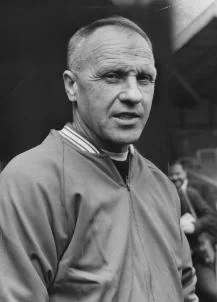
Dezső Kertész
Dezső Kertész was a Hungarian actor and director who worked during the formative years of his country's film industry. Active on both sides of the camera, he contributed to the small but ambitious community of artists who built Hungarian cinema from its earliest silent beginnings.
Early Life
Dezső Kertész was born on September 2, 1892, in Hungary, then part of the Austro-Hungarian Empire. Like many performers of his generation, he likely came of age during a period of rapid cultural change, as Budapest was emerging as a hub for theater and, increasingly, for the new medium of motion pictures. Detailed records of his childhood and early training have not survived in widely available sources, which is common for performers of this era whose careers predate the extensive archival practices of later decades. It is likely that, as with many of his contemporaries, he began his artistic path on the stage before transitioning into the fledgling world of film, where opportunities for actors with theatrical backgrounds were expanding rapidly in the years surrounding World War I. Hungary's film industry, though younger than those of France or the United States, was growing quickly during this period, drawing talent from the country's vibrant theatrical scene into new production studios based largely around Budapest.
Career in Hungarian Cinema
Kertész built a career as both an actor and a director, a dual role common among filmmakers of the silent era who often moved fluidly between performing and shaping productions behind the scenes. His work as a director suggests he possessed not only performing talent but also a broader vision for storytelling on screen, a valuable skill set as Hungarian cinema sought to establish its own identity distinct from the dominant French and German film industries of the time. The 1910s and 1920s were a formative period for Hungarian film, with studios producing dramas, comedies, and adaptations that catered to a growing domestic audience while also experimenting with the visual language of the new medium. As an actor-director, Kertész would have been part of this creative ferment, contributing performances and productions during a time when Hungarian filmmakers were laying the groundwork for what would later become a globally influential national cinema. Many of his contemporaries went on to achieve international recognition, underscoring the significance of the era in which he worked.
Did You Know?
Kertész shared his surname with Mihály Kertész, a fellow Hungarian filmmaker of the same silent-film era who later emigrated to Hollywood and, under the anglicized name Michael Curtiz, directed the classic film Casablanca. The coincidence highlights how deeply the Hungarian film community of the early 20th century was interconnected—and how far its influence eventually spread.
Legacy
Much of the detailed record of Dezső Kertész's individual films and performances has faded with time, a common fate for many pioneers of silent-era cinema whose work predates modern archival preservation and whose films were often lost, damaged, or never widely distributed outside Hungary. Nevertheless, his career represents an important thread in the story of early Hungarian filmmaking, a period when the country's directors, actors, and technicians were experimenting with a brand-new art form under considerable technical and economic constraints. Figures like Kertész helped establish the professional foundations—training pipelines, production practices, and audience expectations—that later generations of Hungarian filmmakers would build upon. His contributions, though not as widely documented today as those of the era's most famous names, remain part of the broader mosaic of early European cinema history, illustrating how numerous lesser-known talents supported the growth of an art form that would soon achieve worldwide reach.