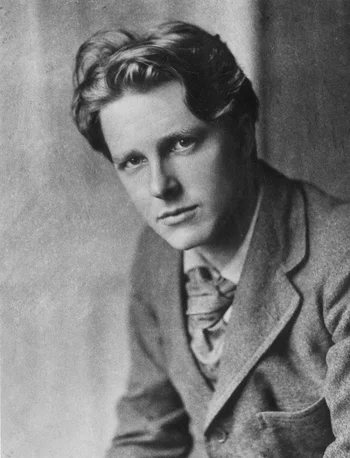
Elisha Otis
August 3, 1811 — April 8, 1861 — Halifax, Vermont, United States
Elisha Graves Otis was a 19th-century American industrialist and mechanic whose invention of the elevator safety brake transformed urban architecture forever. By solving the deadly problem of falling elevator cars, he made it possible to build the skyscrapers that define city skylines today. His name lives on through the company he founded, Otis Elevator Company, still a global leader in vertical transportation.
Early Life and Background
Elisha Graves Otis was born on August 3, 1811, in Halifax, Vermont, the youngest of six children on a family farm. He received little formal education and instead developed a natural aptitude for mechanics from an early age, tinkering with tools and machinery around the farm and local mills. As a young man, he moved frequently between jobs, working as a wagon driver, a builder, and a master mechanic in gristmills and factories across New York and Vermont. This restless period of manual labor gave him hands-on experience with a wide range of mechanical systems, from bedstead manufacturing to sawmill operations. By the early 1850s, Otis had settled into work at a bedstead factory in Yonkers, New York, where he was tasked with designing a hoist to move heavy equipment and debris between floors of the factory. It was this practical, workplace problem—not any grand ambition—that set him on the path toward his most famous invention.
The Safety Elevator
While working at the Yonkers bedstead factory in 1852, Otis was asked to design a freight hoist to lift equipment safely between floors. Existing elevators of the era were simple platforms suspended by ropes, and if the rope broke, the car would plummet, making them dangerous and largely limited to freight use. In 1853, Otis devised an ingenious safety brake: a ratcheting mechanism connected to a wagon spring that would automatically engage jagged guide rails the moment tension on the hoisting rope was lost, halting the car's fall. He demonstrated this invention dramatically at the 1854 New York World's Fair (Exhibition of the Industry of All Nations), where he rode a hoisted platform, ordered the rope cut, and the safety brake caught the car, proving its reliability before a stunned crowd. This public spectacle generated widespread attention and orders. On March 23, 1857, Otis installed the first passenger safety elevator in the five-story E.V. Haughwout & Co. department store in New York City, opening the door to safe vertical transportation for the public.
Did You Know?
Otis proved his safety elevator worked by riding it onto a platform at the 1854 New York World's Fair, then having an axeman cut the hoisting rope in front of a crowd. When the car dropped only inches before the safety brake caught it, Otis reportedly declared, 'All safe, gentlemen, all safe!'
Legacy and Impact
Elisha Otis founded Union Elevator Works, later renamed Otis Brothers & Co. and eventually Otis Elevator Company, to manufacture and sell his invention commercially. Though he died relatively young, on April 8, 1861, in Yonkers, New York, at age 49 from typhoid fever, his sons Charles and Norton continued to build and expand the family business after his death. The safety elevator he invented removed the single greatest obstacle to constructing tall buildings, directly enabling the rise of skyscrapers in the late 19th and 20th centuries. Without a reliable way to move people safely between floors, architectural landmarks like the Eiffel Tower, the Empire State Building, and countless modern high-rises would have been impractical. Today, Otis Elevator Company remains one of the world's largest manufacturers of elevators and escalators, operating in over 200 countries and territories. Elisha Otis is remembered as a quiet inventor whose singular, practical solution to a mechanical problem reshaped the physical form of cities around the globe, forever changing how humans build and inhabit vertical space.