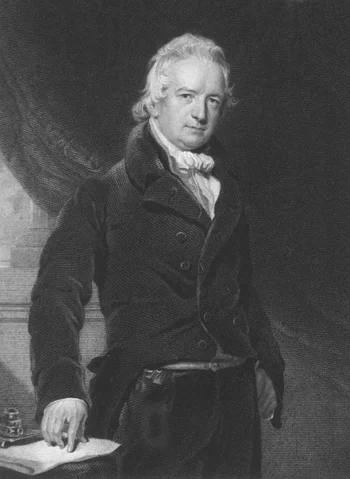
Hans Nielsen Hauge
April 3, 1771 — March 29, 1824 — Rolvsøy, Norway
Hans Nielsen Hauge was a Norwegian lay preacher, entrepreneur, and social reformer whose religious awakening in 1796 launched one of the most influential spiritual and economic movements in Norwegian history. Defying laws that restricted preaching to ordained clergy, he traveled the country spreading a message of personal faith, hard work, and self-reliance. His legacy as both a spiritual leader and a pioneer of Norwegian industry continues to shape the nation's cultural identity.
Early Life and Awakening
Hans Nielsen Hauge was born on April 3, 1771, on a farm in Rolvsøy in the Tune parish of Østfold, Norway, into a devout farming family. He received a modest education typical of rural Norwegian children of the era, learning to read primarily through religious texts such as the Bible and Lutheran devotional writings. Raised in a household shaped by Pietist traditions, Hauge developed an early interest in spiritual matters, though he worked as a farmer and laborer in his youth. The pivotal moment in his life came on April 5, 1796, while he was plowing a field near his home. Hauge later described experiencing a profound religious awakening, feeling called by God to preach repentance and a return to sincere Christian living. This experience transformed him from a quiet farm worker into a driven evangelist. Convinced that ordinary believers, not just ordained ministers, could and should share the Gospel, Hauge began writing religious tracts and speaking to small gatherings. This conviction directly challenged the Conventicle Act of 1741, a Danish-Norwegian law that forbade lay people from holding religious meetings without clergy supervision, setting the stage for years of conflict with both church and state authorities.
The Haugean Movement and Business Ventures
Following his awakening, Hauge traveled tirelessly across Norway—often on foot—preaching a message of personal faith, moral discipline, and diligent labor. His sermons and widely circulated pamphlets attracted thousands of followers, particularly among farmers, laborers, and the emerging middle class, giving rise to what became known as the Haugean movement. Authorities, alarmed by his popularity and his defiance of the Conventicle Act, arrested him repeatedly; he was imprisoned for extended periods, most notably from 1804 to 1811, facing charges that included illegal preaching and unauthorized trade. Despite this persecution, Hauge used his movement to promote economic self-sufficiency among his followers. He established or inspired numerous enterprises, including paper mills, printing presses, textile operations, salt works, fishing ventures, and shipping companies, employing fellow Haugeans and demonstrating that spiritual conviction could align with productive labor. These ventures are widely credited with helping lay the groundwork for Norway's early industrialization, decades before the country's broader industrial revolution took hold. His combination of religious conviction and entrepreneurial energy made him a uniquely influential figure, bridging the worlds of faith and commerce in a way few contemporaries achieved.
Did You Know?
Hans Nielsen Hauge was imprisoned for roughly a decade largely for the crime of preaching without formal ordination, yet during and after this persecution his followers built an economic network spanning paper mills, shipping lines, and printing presses—making him one of the unlikely architects of Norway's early industrial economy.
Later Years and Lasting Legacy
The years of imprisonment took a severe toll on Hauge's health, leaving him physically weakened for the remainder of his life. After his release in 1811, he settled at the Bakkehaugen farm near Christiania (present-day Oslo), where he continued to write and mentor followers, though on a more limited scale. He married twice; his first wife, Andrea Andersdatter, died in 1815, and he later married Ingeborg Marie Olsdatter. Hauge died on March 29, 1824, at Bakkehaugen. His movement did not fade with his death—Haugeanism persisted as a powerful force within Norwegian Lutheranism, encouraging lay participation in religious life and contributing to later reforms that loosened restrictions on preaching. Many historians credit the Haugean network with fostering values of thrift, industry, and civic responsibility that shaped Norway's path toward modern democracy and economic development. Hauge is remembered today as a national figure whose portrait has appeared on Norwegian currency, and his life is commemorated through museums, statues, and academic study as a symbol of grassroots faith, resilience, and entrepreneurial spirit.