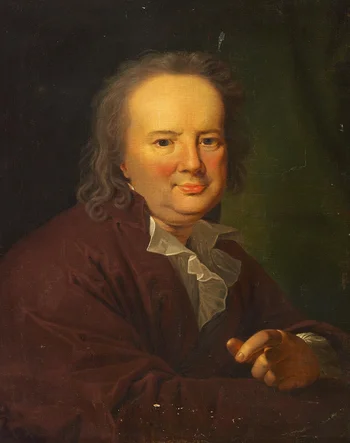
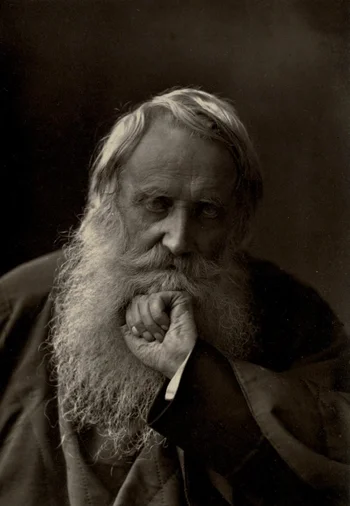
Justus Lipsius
October 18, 1547 — March 23, 1606 — Overijse, Habsburg Netherlands
Justus Lipsius was a Flemish Catholic philologist, philosopher, and humanist whose scholarship reshaped how Renaissance Europe read and understood classical antiquity. Best known for reviving Stoic philosophy in a form compatible with Christian belief, he became the founding figure of the intellectual movement known as Neostoicism. His career took him across religious and political boundaries, teaching at universities in Jena, Leiden, and Leuven.
Early Life and Education
Justus Lipsius was born on October 18, 1547, in Overijse, near Brussels, in the Habsburg Netherlands. He showed early academic promise and was educated by Jesuits in Cologne before studying law at the Catholic University of Leuven. His talent for classical languages and rhetoric quickly set him apart, and he soon turned his attention to the recovery and interpretation of ancient Latin texts. As a young scholar, he traveled to Rome, where he worked as secretary to Cardinal Granvelle and gained direct access to important manuscript collections and the broader currents of Italian humanism. These formative experiences steeped him in the philological methods of the period, emphasizing careful textual criticism and historical context. His deep engagement with Roman authors, particularly Tacitus and Seneca, would become the foundation of his life's work. The religious and political turmoil of the Low Countries during the Reformation era also shaped his outlook, exposing him early on to the competing confessional pressures that would later influence his own shifting religious affiliations and his search for a philosophy of endurance amid instability.
Career and the Rise of Neostoicism
Lipsius built an influential academic career, teaching successively at the universities of Jena, Leiden, and Leuven, institutions representing Lutheran, Calvinist, and Catholic traditions respectively. At Leiden, where he taught for over a decade, he produced his most celebrated works, including acclaimed critical editions of Tacitus and Seneca that set new standards for classical scholarship. His most famous original work, De Constantia (On Constancy), published in 1584, argued that Stoic principles of reason, self-control, and acceptance of fate could help individuals endure the political and religious upheavals sweeping Europe. Crucially, Lipsius reframed ancient Stoicism—originally a pagan philosophy—so that it harmonized with Christian doctrine, particularly regarding divine providence. This synthesis launched Neostoicism, an intellectual movement that attracted thinkers, statesmen, and writers across confessional lines, including figures like Guillaume du Vair and, later, influencing Dutch statesman-scholars. His editorial and philological work on Roman historians and philosophers also transformed how scholars approached ancient texts, blending rigorous textual criticism with practical moral philosophy.
Did You Know?
Justus Lipsius taught at three universities representing three different Christian confessions—Lutheran Jena, Calvinist Leiden, and Catholic Leuven—reflecting his own remarkable and controversial journey through multiple religious affiliations during his lifetime, before finally settling back into Catholicism.
Later Life and Legacy
In 1591, Lipsius left Leiden and returned to the Southern Netherlands, ultimately settling at the Catholic University of Leuven, where he formally reconciled with the Catholic Church and spent his final years. His religious journey—moving among Catholic, Lutheran, and Calvinist environments over his lifetime—mirrored the fractured confessional landscape of his era, and it remains a subject of scholarly debate regarding his sincerity and motives. He continued writing on Stoic ethics, antiquities, and Roman history until his death in Leuven on March 23, 1606. Lipsius's legacy endured well beyond his lifetime: his Neostoic philosophy profoundly shaped seventeenth-century European thought, influencing statesmen, poets, and philosophers who sought resilience amid war and religious conflict. His critical editions of Tacitus and Seneca remained standard references for generations of classicists. Today, he is remembered as one of the most important humanist scholars of the late Renaissance, a bridge figure who fused classical philosophy with Christian ethics and helped lay groundwork for early modern moral and political thought.