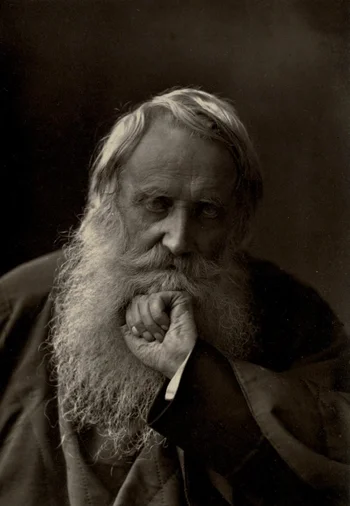
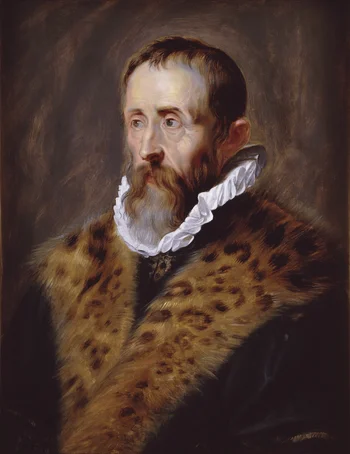
Peter Frederik Suhm
October 18, 1728 — September 7, 1798 — Copenhagen, Denmark
Peter Frederik Suhm was an 18th-century Danish historian renowned for his ambitious, multi-volume history of Denmark and for amassing one of Europe's largest private libraries. A man of independent wealth, he devoted his life to scholarship, writing, and philanthropy, becoming one of the leading intellectual figures of the Danish Enlightenment. His work laid crucial groundwork for the modern, source-based study of Danish and Norwegian history.
Early Life and Education
Peter Frederik Suhm was born on October 18, 1728, in Copenhagen, Denmark, into a family with naval and administrative connections that afforded him a comfortable upbringing. He received a solid classical education and went on to study at the University of Copenhagen, where he developed a lifelong fascination with history, law, and the classics. Inheriting substantial family wealth as a young man freed him from the need to pursue a conventional career, allowing him instead to dedicate his time and resources to independent scholarship. This financial independence proved decisive: rather than entering government service or the clergy, as was typical for educated men of his era, Suhm chose to become a private scholar. He spent time in Norway, where he managed family estates and continued his intellectual pursuits, immersing himself in local archives and historical sources. These early years shaped his enduring interest in the histories of both Denmark and Norway, then united under a single crown, and set him on the path toward the vast historiographical project that would define his life's work.
Historical Scholarship and Major Works
Suhm's crowning achievement was his monumental "Historie af Danmark" (History of Denmark), a multi-volume work that traced Danish history from its earliest, legendary origins through the medieval period. Unlike many earlier chroniclers, Suhm sought to ground his narrative in careful examination of original sources, reflecting the emerging Enlightenment emphasis on critical historical method. He also produced extensive studies and source collections relating to Norwegian history, helping to preserve and systematize knowledge of the North's early past. Beyond formal history, Suhm was a prolific and versatile writer, producing philosophical essays, works on religion and the immortality of the soul, and even fiction, including moralizing and speculative tales that engaged with contemporary political and social questions. His writings reached a broad audience and contributed to public discourse during a politically turbulent era in Danish history, including the aftermath of the Struensee affair. Suhm's scholarly output was remarkable in both volume and range, and his willingness to tackle controversial subjects, including critiques of absolutist power, marked him as an independent-minded figure within Danish intellectual life.
Did You Know?
Peter Frederik Suhm used his considerable inherited wealth to build one of the largest private libraries in 18th-century Europe, then opened it freely to scholars and the public rather than keeping it for himself. He was also so well known for giving money to Copenhagen's poor that he became something of a local legend in his own lifetime.
Library, Philanthropy, and Legacy
Suhm assembled one of the largest and most valuable private libraries in Europe, reportedly containing tens of thousands of volumes covering history, literature, science, and rare manuscripts. He generously opened this collection to scholars and the public, transforming his home into a center of learning in Copenhagen. Alongside his intellectual pursuits, Suhm was widely known for his charity, earning a reputation as a benefactor of the poor and using his personal fortune to support those in need throughout the city. He died on September 7, 1798, in Copenhagen, leaving behind an extraordinary body of historical and literary work. His library and manuscripts eventually enriched Danish public collections, cementing his legacy as both a scholar and a civic benefactor. Suhm's rigorous, source-driven approach to Danish and Norwegian history influenced generations of later historians, and he is remembered today as a foundational figure in Scandinavian historiography whose combination of erudition, generosity, and independence of thought embodied the ideals of the Enlightenment era in Denmark.