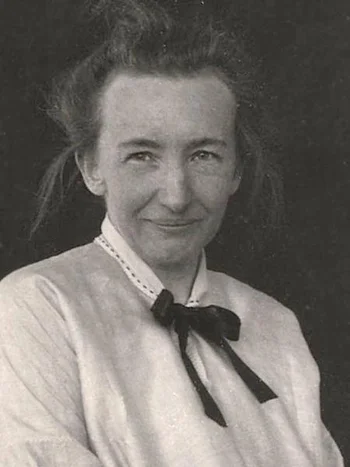
Mildred Rebstock
Mildred Catherine Rebstock was an American pharmaceutical chemist whose research team achieved a landmark in medical science: the first full synthesis of an antibiotic. Working at Parke-Davis, she helped synthesize chloromycetin, better known as chloramphenicol, transforming how a critical infection-fighting drug could be produced. Her work made a life-saving medicine widely accessible and cemented her place in the history of pharmaceutical chemistry.
Early Life and Education
Mildred Rebstock was born on November 29, 1919, in the United States, at a time when few women pursued careers in scientific research, let alone chemistry. She pursued higher education in chemistry, eventually earning a doctorate in the field, a significant achievement for a woman in the sciences during the 1940s. Her academic training gave her a strong foundation in organic chemistry, the discipline that would define her career. After completing her studies, she sought work in industrial research, an arena still largely closed to women chemists at the time. She joined Parke-Davis, a major pharmaceutical company based in Detroit, Michigan, as a research chemist. There, she entered a demanding, competitive environment focused on drug discovery and development, where her skills in synthetic organic chemistry would soon be put to a historic test. Her early career set the stage for the breakthrough that would define her legacy and reshape the treatment of bacterial infections worldwide.
The Synthesis of Chloramphenicol
In the late 1940s, Rebstock worked as part of a research team at Parke-Davis investigating chloromycetin, an antibiotic originally isolated from soil bacteria and known for its effectiveness against typhoid fever and other serious infections. Natural extraction of the compound was costly and inefficient, limiting its availability. Rebstock and her colleagues succeeded in determining the chemical structure of the compound and then achieving its complete laboratory synthesis, chemically building chloramphenicol from simpler starting materials rather than extracting it from living organisms. This was the first time any antibiotic had been fully synthesized, a major scientific milestone that proved complex natural antibiotics could be manufactured artificially. The achievement allowed chloramphenicol to be mass-produced affordably and consistently, dramatically expanding access to an effective treatment for dangerous bacterial infections. Her contribution demonstrated the power of synthetic chemistry to solve problems of drug supply and cost, influencing how future antibiotics and pharmaceuticals would be developed and manufactured on an industrial scale.
Did You Know?
Mildred Rebstock's synthesis of chloramphenicol marked the very first time in history that an antibiotic had been fully created in a laboratory rather than extracted from a living organism. This breakthrough made the life-saving drug dramatically cheaper and easier to produce at scale.
Legacy and Impact
Chloramphenicol, the drug Rebstock helped bring into existence through full chemical synthesis, remains classified by the World Health Organization as a critically important antibiotic for human medicine. It continues to be used to treat serious bacterial infections, particularly in regions where more expensive antibiotics are unavailable. Rebstock's work stands as a pioneering example of how industrial chemistry can directly translate into global public health benefits, saving countless lives through improved drug accessibility. As a woman succeeding in an overwhelmingly male-dominated field during the mid-twentieth century, she also broke important professional barriers, paving the way for future generations of women in pharmaceutical and chemical research. Her achievement in first fully synthesizing an antibiotic is remembered as a defining moment in the history of medicinal chemistry, marking a turning point after which synthetic production became a viable pathway for complex, naturally derived drugs. Decades later, her contribution continues to be recognized in discussions of antibiotic history and the scientific advances that shaped modern infectious disease treatment.