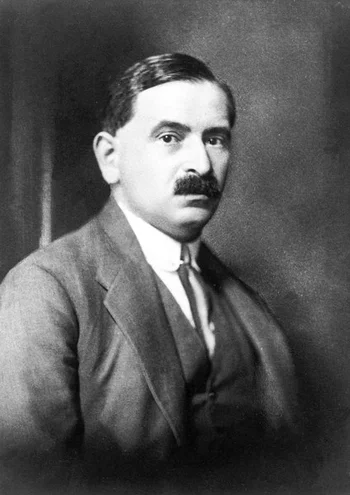
Morris Carnovsky
September 5, 1897 — September 1, 1992 — St. Louis, Missouri, United States
Morris Carnovsky was an American stage and film actor whose career spanned more than six decades, from the golden age of Broadway to Hollywood's studio era and beyond. A founding member of the influential Group Theatre, he helped shape a generation of American acting before his career was derailed by Cold War politics. Carnovsky rebuilt his reputation as one of the finest classical actors of his time, particularly renowned for his Shakespearean performances at the Stratford Shakespeare Festival.
Early Life and Beginnings
Morris Carnovsky was born on September 5, 1897, in St. Louis, Missouri, to Russian Jewish immigrant parents. He developed an early passion for theater and language, eventually studying at Washington University in St. Louis before pursuing acting professionally. He moved to New York City in the 1920s to chase his ambitions on the stage, joining the Theatre Guild, where he honed his craft performing in a range of productions. It was during this formative period that Carnovsky became immersed in the progressive theatrical currents sweeping New York, absorbing ideas about ensemble acting and socially conscious drama that would come to define his most important professional venture. His early work established him as a serious, versatile performer capable of tackling both classical and contemporary material, setting the stage for his pivotal role in one of American theater's most transformative institutions.
The Group Theatre and a Flourishing Career
In 1931, Carnovsky became one of the founding members of the Group Theatre, alongside Harold Clurman, Cheryl Crawford, and Lee Strasberg. This groundbreaking company, which operated until 1940, sought to create socially relevant American drama using ensemble techniques inspired by Konstantin Stanislavski's methods, and it became a training ground for many actors and directors who would shape American theater and film for decades. Carnovsky appeared in numerous Group Theatre productions, building a reputation as a powerful and versatile performer. His career flourished on Broadway and expanded into film, where he appeared in notable pictures including 'Rhapsody in Blue' (1945), 'Address Unknown' (1944), and 'Gun Crazy' (1950). By the early 1950s, Carnovsky was a respected and busy actor working across multiple mediums, his talents in demand from Broadway producers and Hollywood studios alike. This momentum, however, was about to be interrupted by the political upheaval of the McCarthy era, which would test both his career and his convictions.
Did You Know?
Despite being blacklisted during the McCarthy era for alleged Communist Party membership, Morris Carnovsky reinvented himself as one of America's foremost Shakespearean actors, famously performing King Lear and Shylock to acclaim at the Stratford Shakespeare Festival well into his later years.
Blacklist, Resurgence, and Legacy
In the early 1950s, professional colleagues told the House Un-American Activities Committee that Carnovsky had been a member of the Communist Party, and he was subsequently blacklisted, finding film and television work scarce for several years. Rather than abandoning his craft, Carnovsky redirected his energy toward the stage, and his career experienced a remarkable resurgence. He became closely associated with the Stratford Shakespeare Festival, delivering acclaimed performances in title roles such as King Lear and Shylock in 'The Merchant of Venice,' which he also performed for college campus audiences across the country. These late-career Shakespearean interpretations cemented his reputation as one of America's great classical actors, admired for his depth, intelligence, and command of language. Carnovsky continued acting into his later years, passing away on September 1, 1992, in Easton, Connecticut. His legacy endures through his Group Theatre contributions and his influential Shakespearean work; he is also remembered as the uncle of veteran character actor James Karen.