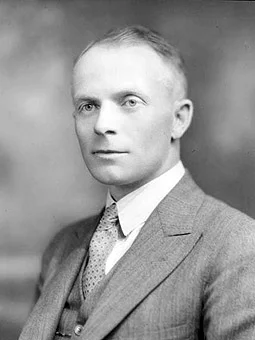
Eugene Foss
September 24, 1858 — September 13, 1939 — West Berkshire, Vermont, United States
Eugene Noble Foss was an American manufacturer and politician who rose from the pipe-manufacturing industry to become one of Massachusetts's most notable political figures. He served in the United States House of Representatives before winning election as Governor of Massachusetts, an office he held for three consecutive terms. Foss's career reflected the shifting political currents of early 20th-century America, as he moved between party affiliations while championing progressive reforms.
Early Life and Business Career
Eugene Noble Foss was born on September 24, 1858, in West Berkshire, Vermont. He pursued education at Massachusetts Institute of Technology, where he developed technical skills that would serve his later business ventures. Foss entered the manufacturing sector and became a highly successful industrialist, eventually building a fortune through the production of pipe and related industrial goods. His company, the Foss Manufacturing Company, became a significant enterprise, and his business acumen earned him considerable wealth and standing within Massachusetts's commercial community. This success provided the financial independence and public visibility that would later enable his transition into political life. Like many industrialists of the Gilded Age, Foss's practical experience running a manufacturing operation shaped his views on labor, trade, and economic policy, views he would carry into his subsequent political career. His rise from businessman to statesman was emblematic of an era when successful entrepreneurs increasingly sought public office to influence the policies affecting commerce and industry.
Political Rise and Governorship
Foss entered national politics as a member of the United States House of Representatives, representing Massachusetts. His time in Congress exposed him to the progressive currents reshaping American politics in the early 1900s, and he became associated with reform-minded positions on issues like tariffs and corporate regulation. Foss's political affiliations shifted during this period, reflecting the broader realignment occurring within the Republican and emerging Progressive movements. He successfully sought the governorship of Massachusetts and was elected to serve three consecutive one-year terms, governing from 1911 to 1914. As governor, Foss pursued progressive policies typical of the era, including efforts toward greater government efficiency, labor protections, and regulatory reform. His tenure placed him among the notable progressive governors of his time, navigating the political tensions between traditional party structures and the reform movements gaining momentum across the country. His three terms as governor represented the pinnacle of his political career and cemented his legacy as a significant figure in Massachusetts political history.
Did You Know?
Eugene Foss switched political parties during his career, having been elected to Congress as a Republican before later winning the Massachusetts governorship as a Democrat—an unusual political journey that reflected the era's shifting party loyalties amid the rise of the Progressive movement.
Later Years and Legacy
After leaving the governorship in 1914, Foss largely stepped back from elected office, though he remained a figure of interest in Massachusetts political and business circles. He returned attention to his manufacturing interests, continuing to oversee his business ventures in the years following his political career. Foss's legacy rests primarily on his unusual dual identity as both a successful industrialist and a three-term governor, a combination that highlighted the close relationship between business leadership and political power during the Progressive Era. His career illustrates how manufacturers and entrepreneurs of his generation often leveraged their commercial success into public service, bringing pragmatic, business-oriented perspectives to government. Eugene Foss died on September 13, 1939, having lived through immense transformations in American industry, politics, and society. He is remembered today as part of a generation of self-made businessmen-turned-politicians who shaped Massachusetts governance during a pivotal period of reform, leaving behind a record of leadership that bridged the worlds of commerce and public administration.