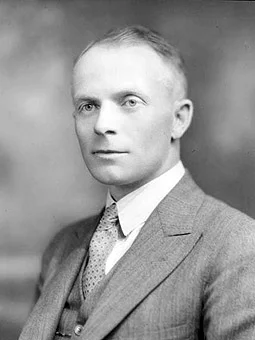
Gustave Garrigou
September 24, 1884 — January 28, 1963 — France
Cyprien Gustave Garrigou was one of the finest professional road racing cyclists of the early twentieth century, celebrated for his consistency and climbing prowess. He rode the Tour de France eight times, winning it outright in 1911, and built one of the most remarkably steady records in the race's early history. Nicknamed 'the Cat' for his fearless descending, Garrigou remains a legendary figure from cycling's pioneering era.
Early Life and Entry into Cycling
Gustave Garrigou was born on September 24, 1884, in France, during the earliest years of organized bicycle racing. Cycling was rapidly gaining popularity across the country, and ambitious young riders from working-class backgrounds saw the sport as a path to fame and financial reward. Garrigou took up racing as a teenager and quickly displayed a natural aptitude for the discipline, particularly excelling in mountainous terrain that demanded both endurance and tactical intelligence. His talent for descending treacherous mountain roads at high speed earned him admiration—and the enduring nickname 'the Cat'—among fellow riders and spectators alike. By his early twenties, Garrigou had turned professional, entering an era when road racing was brutally demanding, with primitive equipment, unpaved roads, and races that stretched for hundreds of kilometers in a single stage. He steadily built a reputation as one of the most reliable and formidable competitors on the emerging professional circuit, setting the stage for a career that would place him among the sport's early legends.
Tour de France Dominance
Garrigou's career reached its pinnacle in the Tour de France, a race he entered eight times between the mid-1900s and early 1910s. Across those eight editions, spanning 117 total stages, he won eight individual stages outright—but his true mastery lay in his extraordinary consistency. He finished in the top ten an astonishing 96 times and placed among the top five riders 65 times, figures that reflected an almost unmatched ability to perform at a high level day after day over brutal multi-week races. His crowning achievement came in 1911, when he won the overall Tour de France title, cementing his status as one of the finest riders of his generation. That same year, he also captured victories in other prestigious one-day classics, including Paris–Roubaix and Milan–San Remo, making 1911 the defining year of his career. He also finished as Tour runner-up on multiple occasions and stood on the podium repeatedly throughout the decade, a testament to his remarkable longevity and competitive edge in an era of grueling, unsupported racing.
Did You Know?
During the 1911 Tour de France, a gunshot was fired near Garrigou while he climbed a mountain pass, an alarming episode tied to regional tensions of the era. Remarkably, he pressed on to win that year's overall Tour title. That same year he also won Paris–Roubaix and Milan–San Remo, making 1911 the single greatest season of his career.
Legacy and Later Years
Garrigou's career unfolded during cycling's formative years, when the Tour de France was still developing the mystique and prestige it holds today, and his achievements helped shape that growing legend. His 1911 overall victory, combined with his unmatched record of top-five and top-ten finishes, established him as one of the sport's first great all-around champions—strong in the mountains, tactically astute, and durable across grueling multi-stage events. Beyond the statistics, Garrigou became part of Tour de France folklore for surviving a frightening incident during the 1911 race, when a gunshot was fired near him on a mountain climb amid regional tensions, an episode that underscored the intensity and occasional danger surrounding early Tour competition. After retiring from professional racing, Garrigou remained connected to the cycling world, and his name endured as a benchmark for consistency in an era before modern training and support systems existed. Today, cycling historians regard him as one of the sport's essential early figures, a rider whose steady brilliance across nearly a decade of Tour de France competition helped define what it meant to be a champion in cycling's heroic age.